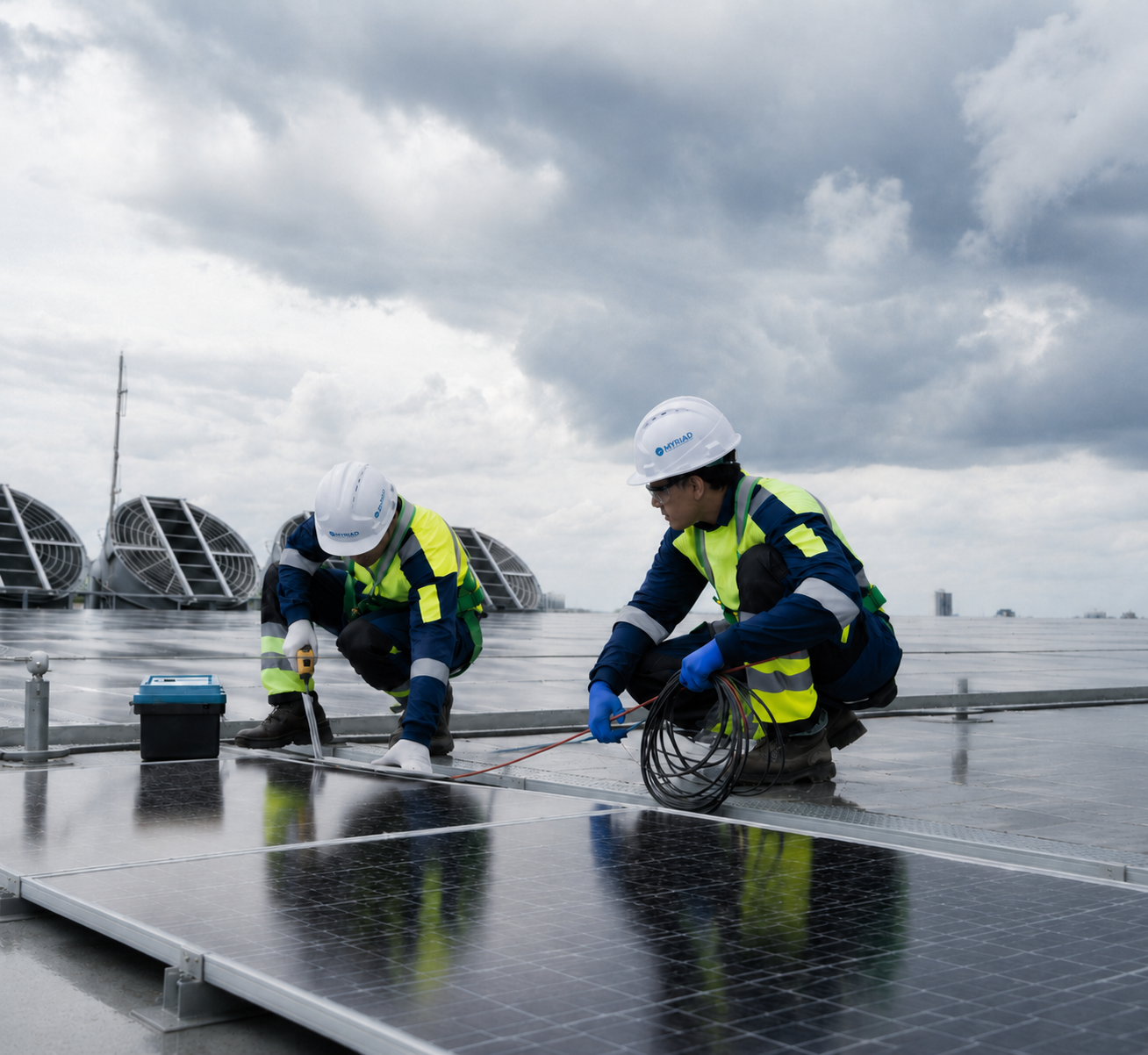
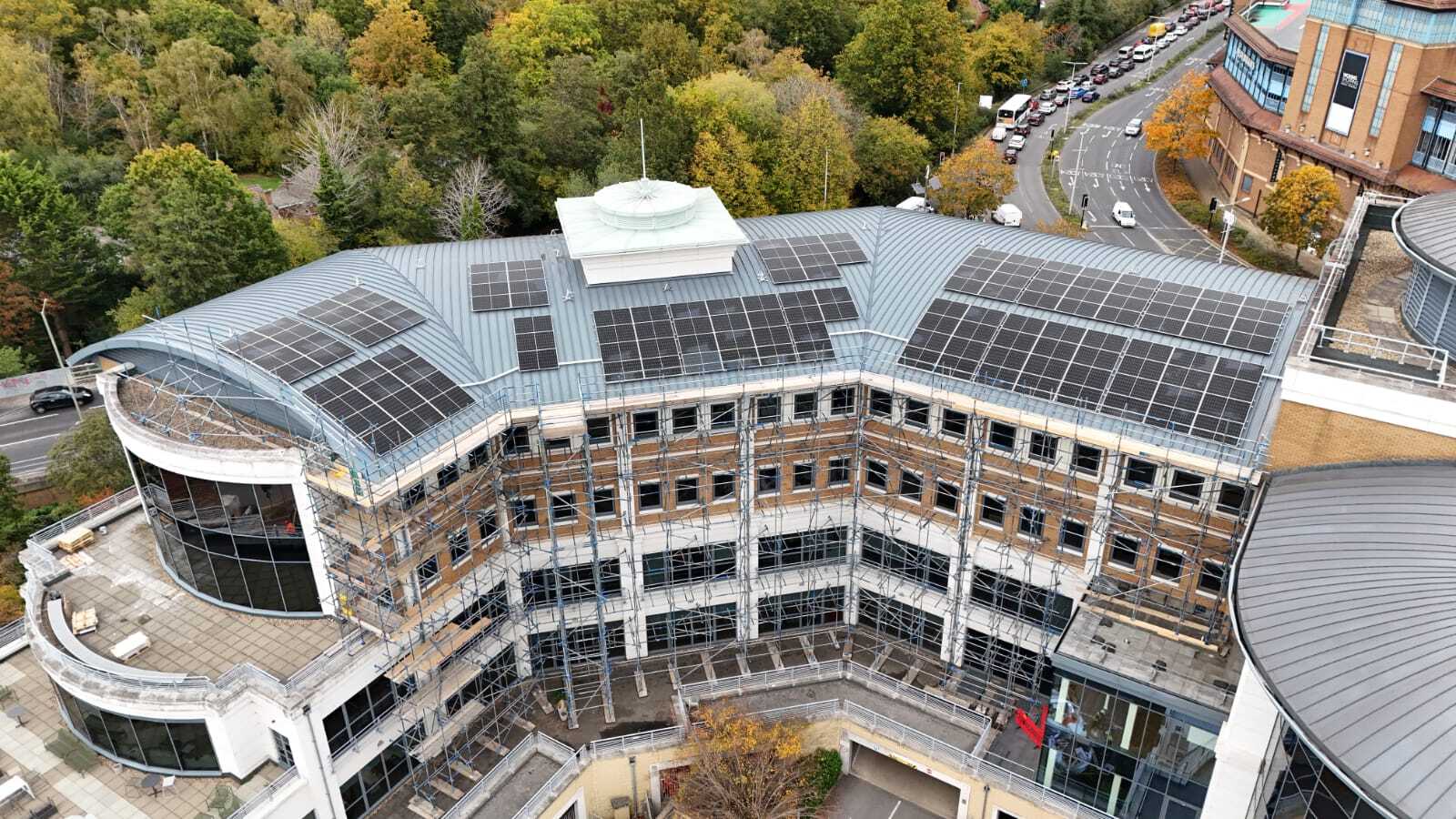
Myriad have recently completed a new installation of a solar PV system on a office complex in Woking with a standing seam roof covering. Fitting solar PV panels to standing seam roofs (e.g. Kalzip, Tata, Kingspan, or similar) is quite common — but it comes with some distinct challenges that need careful design and installation to avoid leaks, structural issues, or poor performance.
System overview
- 64kW DC installed: Solar Watt 455W panels
- 50kW AC installed: Solar Edge inverters
- Modbus Energy Meter for Smart Monitoring / G100 export control
- K2 mounting kit for standing seam - box type
- Optimisers fitted for DC shut off
- Firefighter gateway for remote DC shutoff
- 60MWh/yr expected generation
Mounting Method and Fixing Compatibility
- Standing seam roofs are actually ideal for solar PV because you can mount panels without penetrating the roof sheet.
- Special clamps (e.g. S-5!, Kalzip SolarMount, Renusol seam clamps) grip the seams mechanically — no drilling, no holes, no leaks.
Seam profile compatibility — not all clamp types fit all seams (e.g., double-folded vs. snap-lock vs. round-top).
- Incorrect clamp selection or overtightening can damage the seam, void the roof warranty, or cause deformation over time.
- Manufacturers often require load testing or approval of clamp types for their particular seam system.
Structural Load and Seam Strength
- Solar panels add dead load (≈ 12–15 kg/m²) plus wind uplift loads.
- Standing seam sheets are thin — loads must be transferred safely to purlins or decking beneath via the clamps.
- Often a structural engineer’s sign-off is needed for commercial systems.
Wind Uplift and Panel Separation
- Standing seam roofs can be quite “slippery” — if clamps aren’t correctly spaced, panels can shift under high wind.
- Edge zones and corners have higher uplift pressures, requiring extra clamps or rails, and a detailed wind load calculation to BS EN 1991-1-4
Thermal Expansion and Movement
- Standing seam roofs expand and contract along the seam with temperature changes.
- The PV mounting system must allow for roof movement without stressing the clamps or panels.
- Use sliding clamps or allow for movement slots in rails to prevent fatigue or noise.
Earthing and Lightning Protection
- The roof panels are often insulated from the structure, so earthing continuity is not guaranteed.
- A separate equipotential bonding and lightning protection review may be required to meet BS 7671 and BS EN 62305.
Access, Walkability, and Maintenance
- Standing seam roofs are not designed for heavy foot traffic.
- PV installation must use load-spreading boards to prevent denting or seam damage.
- Future maintenance (both roof and solar) must plan for safe access without damaging seams or coatings.
If you are looking at a similar project where the solar PV needs to sit above the roof mounted plant then give us a call today - 0203 189 0665